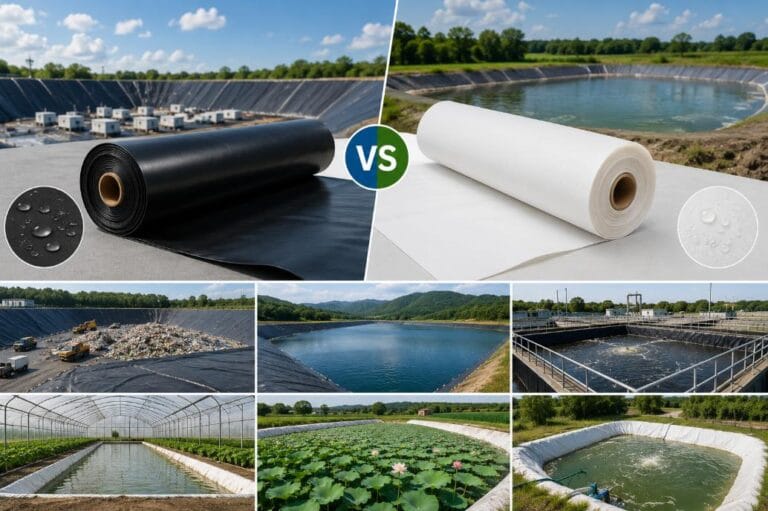

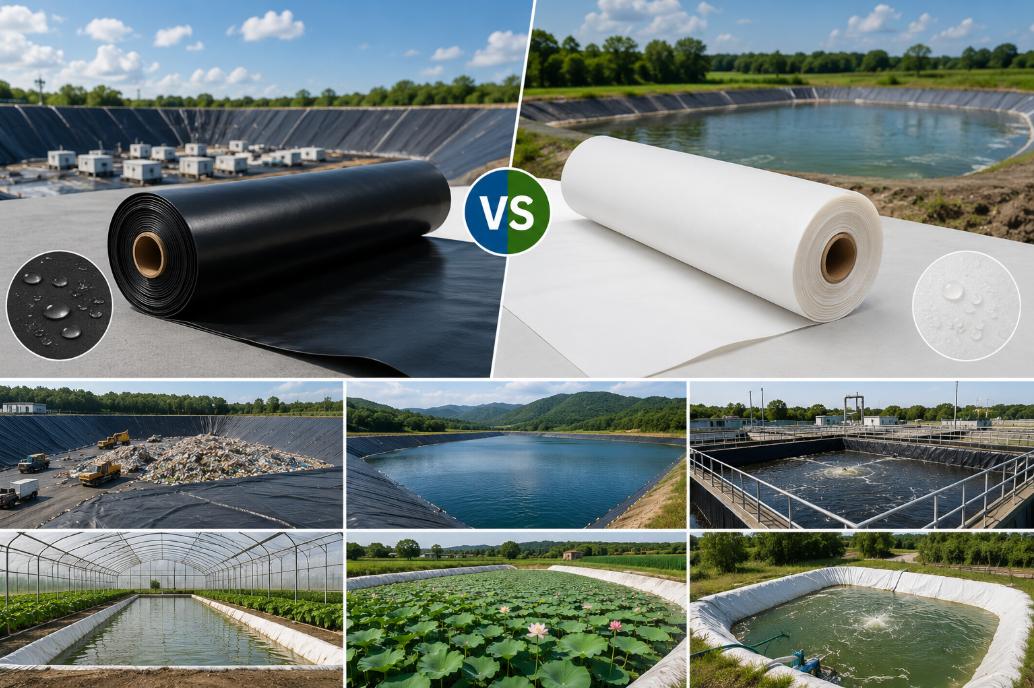
Diferencias principales entre geomembranas de HDPE y LDPE + recomendaciones de selección
I. Diferencias en Materias Primas y Rendimiento
1. HDPE (Geomembrana de Polietileno de Alta Densidad)
- Alta densidad, alta cristalinidad, fuerte rigidez, alta dureza, resistencia a la perforación y excelente resistencia a la tracción
- Resistente a ácidos y álcalis, resistente a la corrosión de aguas residuales, antienvejecimiento, resistente a bajas temperaturas y tiene buena estabilidad en prevención de filtraciones
- Resistencia a altas temperaturas: puede soportar alrededor de 80°C durante períodos cortos y la soldadura por fusión en caliente es fuerte y a prueba de fugas
- Desventajas: Poca flexibilidad, se endurece fácilmente cuando se dobla a bajas temperaturas y la flexión durante la construcción no es tan suave como con el LDPE
2. LDPE (Geomembrana de polietileno de baja densidad)
- Baja densidad, textura suave, ductilidad extremadamente alta y alto alargamiento de desgarro
- Buena tenacidad a baja temperatura, alta adhesión al suelo congelado y superficies irregulares picadas
- Desventajas: Baja dureza, mala resistencia a la perforación, mala resistencia a altas temperaturas (se ablanda fácilmente a >50°C), resistencia química débil, propensa a la fluencia y se estira, adelgaza y gotea fácilmente después de un entierro prolongado
II. Comparación de parámetros simplificada
Artículo Geomembrana HDPE Geomembrana LDPE
Dureza: Rígida, Suave
Resistencia a la perforación: Excelente, Pobre
Resistencia química: Fuerte (Relleno, Alcantarillado, Estanque Químico), Promedio (Agua Dulce Ordinaria)
Resistencia al calor: alta, baja
Alargamiento: Bajo, Extremadamente Alto
Costo: Alto, Barato